
The Injury That Never Fully Healed
You rested it, iced it and did the PT. It got better, then it came back. Tendon and joint injuries are some of the most common reasons people end up living with pain, and some of the most misunderstood. Dr. Neil Spiegel, DO, MBA, looks for why yours isn't healing and treats it without surgery.
How Are Joint and Tendon Injuries Treated Without Surgery?
Joint and tendon injuries like tennis elbow, rotator cuff tendinopathy, Achilles pain, ligament sprains, partial tears and arthritis often stop healing on their own. At the Osteopathic Center for Healing in Rockville, MD, Dr. Neil Spiegel, DO, MBA finds why the tissue isn't healing, then treats it with osteopathic care, prolotherapy, perineural injection therapy and ultrasound-guided PRP, BMAC or adipose therapy.
What's Going On Inside the Injury?
Tendons
Tendons connect muscle to bone. They're tough but have a limited blood supply, so they heal slowly. Small tears that don't fully repair can leave a tendon weaker, thicker and painful.
Ligaments
Ligaments connect bone to bone and hold your joints steady. When they're stretched or torn, the joint can become loose, and that extra movement strains the cartilage and muscles around it.
Cartilage
Cartilage cushions the joint. It has almost no blood supply of its own, which is why joint damage tends to build over time instead of healing.
Does This Describe You?
How Do These Injuries Happen?
Overuse
Repeating the same motion at work, in sports or at the gym.
Too Much, Too Fast
A new workout, a big hike or the weekend warrior game.
An Old Injury
The original sprain or strain never fully healed and left the area weaker.
How You Move
Posture, foot mechanics or weakness in one area that overloads another.
Changes in Your Body
Age, hormones, blood sugar and nutrition all affect how well tissue repairs.
What Do Most People Try, and Where Does It Fall Short?
What Happens When an Injury Doesn't Heal?
What Can a Closer Look Find?
The Pain Isn't Always Where the Problem Is
A weak hip can cause knee pain, and a stiff upper back can strain the shoulder. Dr. Spiegel looks at the whole chain, not just the sore spot.
It May Be a Nerve, Not a Tendon
A pinched or irritated nerve can feel just like tendon pain. Dr. Spiegel is board certified in electrodiagnostic medicine and can test nerves directly.
Seeing the Injury in Real Time
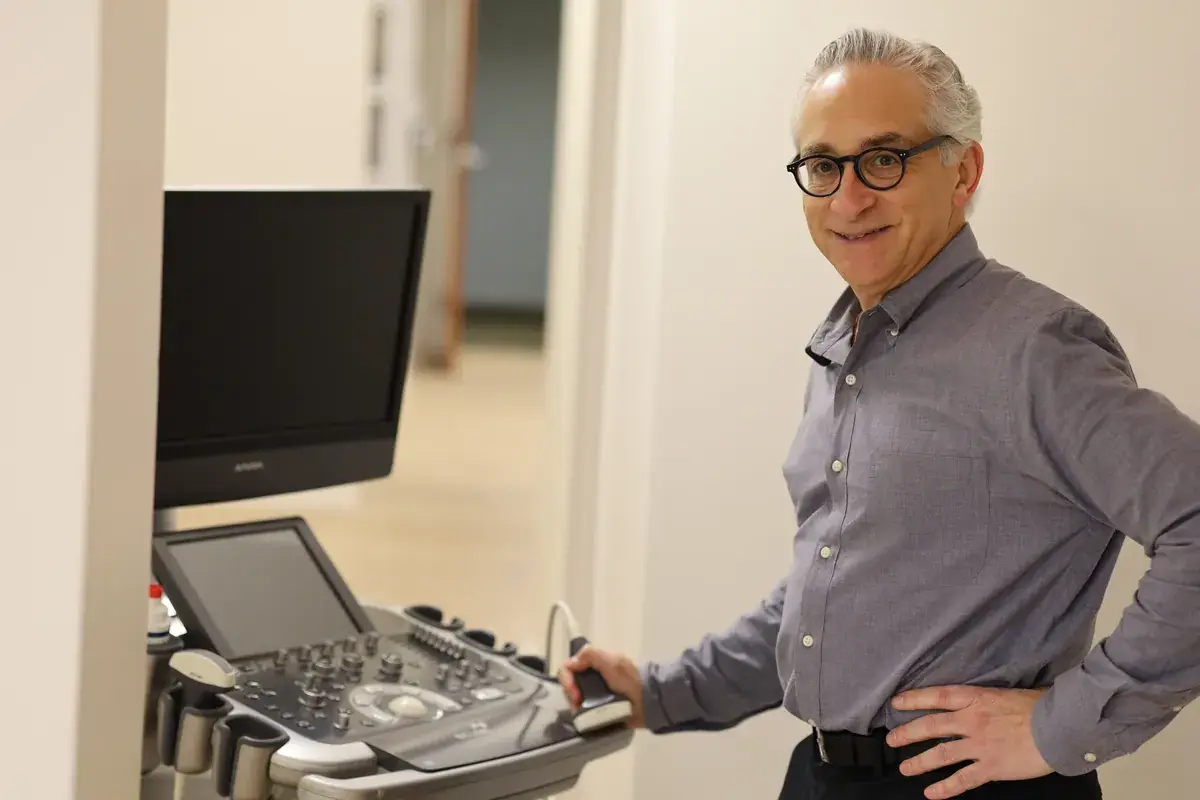
Ultrasound in our office lets him look at the tendon, ligament or joint while it moves, and guide treatment exactly where it's needed.
Your Body Affects How You Heal
Blood sugar, vitamin D, hormones and nutrition all affect tissue repair. We look at those too, so your body can actually heal.
A Loose Ligament Can Be the Hidden Cause
Joints that keep getting sprained or feel like they "give out" often come down to ligaments that never tightened back up.
Which Treatments Help Tissue Repair?
Your plan is matched to your injury, and often combines more than one approach.
PRP
Platelet-rich plasma concentrates your own platelets to help damaged tendons and joints repair.
Learn About PRP →Prolotherapy
A simple solution that helps loose ligaments and tendons tighten and strengthen.
Learn About Prolotherapy →BMAC and Adipose Therapy
Concentrates from your own bone marrow or fat, for more advanced joint damage.
Learn About BMAC →Exosomes
Tiny messengers that cells use to signal repair, used as part of some regenerative treatment plans.
Regenerative Medicine →Ultrasound-Guided Injections
Every injection is placed exactly where it's needed, guided by ultrasound in real time.
Hands-On Care and Acupuncture
Osteopathic treatment and acupuncture restore motion, ease tension and calm pain.
Osteopathic Treatment →What Does Working With Dr. Spiegel Look Like?
Full Evaluation
Your history, a hands-on exam, and ultrasound or nerve testing when needed.
A Clear Diagnosis
What's injured, why it isn't healing and what's driving it.
Your Treatment Plan
One or more of the options above, matched to your injury and goals.
Back to Activity
Guidance on movement and rehab so the repair lasts.
Find Out Why It Isn't Healing
What Do People Ask About Joint and Tendon Injuries?
Do I Need an MRI First?
Not always. Dr. Spiegel uses ultrasound in the office to look at many tendon and joint injuries. If you already have imaging, bring it. If the exam and ultrasound don't tell the whole story, he'll order an MRI or other diagnostic testing, or refer you to get it.
Can I Avoid Surgery?
Many people with tendon and joint injuries do well without it. Dr. Spiegel will tell you honestly if surgery is the better path for you.
Is It Too Late if My Injury Is Years Old?
No. Long-standing injuries are some of the most common ones we treat.
Should I Stop Exercising?
Usually not completely. We'll help you stay active in a way that supports healing.
Will This Be Covered by Insurance?
We don't bill insurance for visits. If you have out-of-network benefits, we'll give you a claim form to submit to your insurer.
Don't Live With It
Have questions about your injury? We're happy to help. New to OCFH? Start with our New Patients page.